


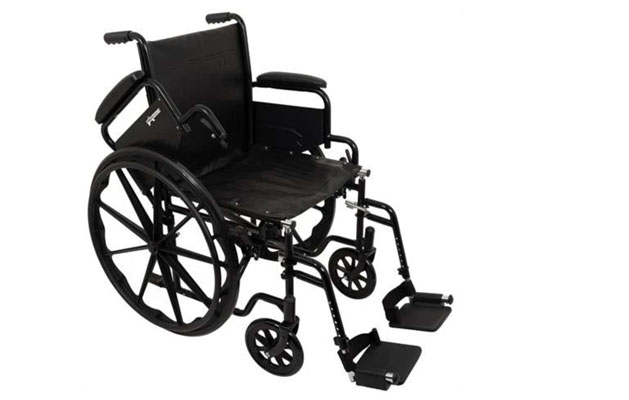
Standard wheelchairs appear to be very simple pieces of equipment. Yet slight variations in weight, size, and design affect the comfort and ease of use, as well as the product’s safety.
Typical models weigh over 35 pounds, with seats measuring 16 to 20 inches wide and capable of carrying up to 250 pounds, though some can carry 300 pounds. Thus, a considerable number of differences exist within this type of wheelchair.
Special sets of standard wheelchairs from recognized companies will show how varied this product can be in terms of size, materials, and features. Choosing the wrong combination can result in an uncomfortable, hard-to-maneuver, or unsafe chair for the person using it.

The five checks below cover what actually matters when narrowing down the options.
1. Seat Width and Depth Matched to the User’s Body
Sizing is the first and most important check, and it starts with the user’s actual measurements rather than averages or guesses. The seat width has to be measured at the widest point of either the hips or the thighs when seated and must allow one to two inches of extra space on either side so that there is no restriction against the armrests.
Likewise, the seat depth is measured from the rear end of the hips to the rear end of the knees, minus a couple of inches. Most stores offering a standard wheelchair provide measurements for width, depth, and size for each product, making it easier to compare them against these figures than to rely on small, medium, and large sizes.
2. Weight Capacity With a Reasonable Margin
Every wheelchair has a maximum weight rating, and it is important to choose a chair with capacity to spare rather than one that matches the user’s weight exactly.
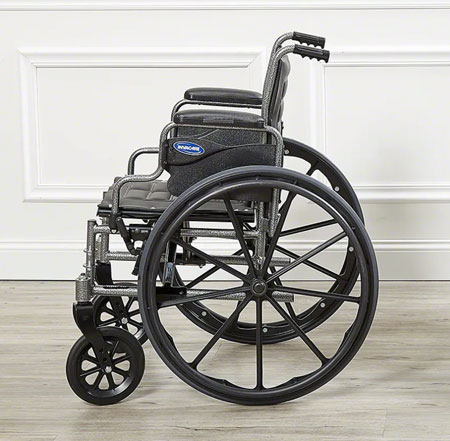
Most standard wheelchairs are rated for up to 250 pounds, while heavy-duty and bariatric models extend up to 300 pounds or more; loading a chair close to its limit accelerates wear on the frame, casters, and upholstery, and can compromise stability during transfers.
Weight capacity is also tied to seating safety more broadly. Research shows that an unsuitable seating system can compromise postural support and pressure distribution regardless of how well the chair otherwise fits.
Beyond immediate safety, building in a buffer above the user’s current weight also accounts for normal weight fluctuation over the life of the chair.
3. Frame Weight and How Often the Chair Will Be Transported
A regular wheelchair’s frame is generally made of steel or aluminum, and the material used influences strength, weight, and ease of carrying. If a wheelchair’s frame is made of steel, it is likely to be heavier but cheaper.
That said, this type of frame is better suited to wheelchairs that are primarily used in one location and remain mainly in one place, whereas aluminum frames are lighter and more portable but generally more expensive.
Likewise, almost all regular wheelchairs fold to save space for transportation and storage, but the fold width and folded size vary enough among manufacturers to warrant considering the actual trunk or storage space needed.
For anyone transporting the chair daily, a few extra pounds on the frame add up quickly over repeated lifts in and out of a vehicle.
4. Armrest and Footrest Configuration
Armrests and footrests are where a lot of the day-to-day usability differences show up between otherwise similar chairs. Fixed full-length armrests offer more stability and support for pushing up during transfers, while flip-back or desk-length armrests make it easier to pull the chair up to a table or transfer sideways from a bed or car seat.
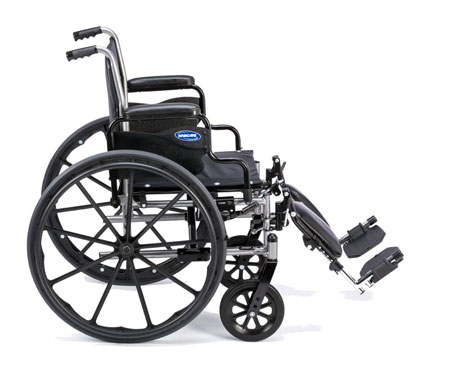
Footrests range from fixed platforms to swing-away or elevating designs, and the right choice depends on whether the user or a caregiver will be doing most of the transferring, and whether the chair needs to fit under a desk or dining table.
None of these options makes one chair objectively better than another; they simply need to match how the chair will actually be used daily rather than being chosen on price alone.
5. Insurance Coverage and Medical Necessity Requirements
If you will be buying your wheelchair through Medicare or another insurance company, you should check the insurance criteria before selecting a model. Generally, Medicare requires a certificate confirming a mobility disability that affects the beneficiary’s ability to perform their routine activities at home and that the prescribed wheelchair meets all the beneficiary’s criteria.
Also, the place where the person lives should provide enough space for the wheelchair to be used properly, and the person himself should be able to physically use the selected wheelchair. Such a preliminary check may help reduce the choice to only those models that meet the user’s criteria and are covered by insurance.
Wrapping Up
None of these five criteria exists in isolation. A chair with the correct seat width and weight capacity still needs the right frame material and armrest configuration to suit how it will actually be used, and even a well-matched chair needs proper documentation if it is being billed to insurance.
Go through each of these five criteria systematically: sizing, weight capacity, frame and portability, armrest and footrest configuration, and documentation. Making the purchase based on cost or aesthetics alone is what sets apart a wheelchair that truly fits its user’s life from one that just appears to fit on paper.