


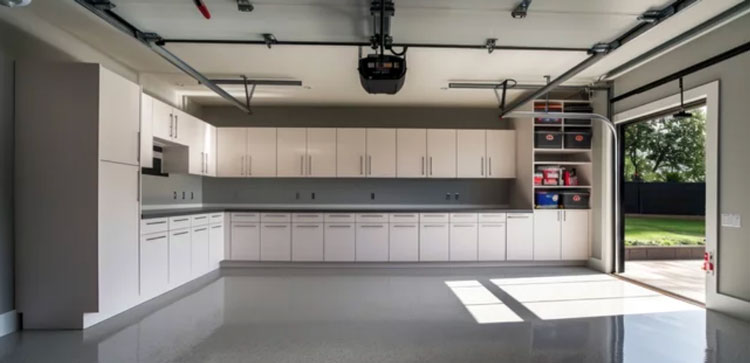
A polished or coated garage floor is a real investment. Here’s how to protect it from the most common forms of damage and keep it looking the way it did when it was first done.
Garage floors take punishment. Vehicles park on them, tools get dropped on them, chemicals spill on them, and water and debris get tracked onto them year-round. A bare concrete floor is resilient enough to survive most of this without special treatment, though it will stain and look progressively worse over time. A polished or coated floor is more visually impressive but also more vulnerable to specific types of damage if it’s not properly maintained.
Understanding what damages these surfaces and what protects them turns maintenance from something vague and unpredictable into a simple set of habits that preserve the floor’s appearance and function for years.

Chemical Stains: The Most Common Threat
Motor oil, transmission fluid, brake fluid, and coolant are all floor-staining culprits that every garage deals with. The difference between these stains being a minor issue and a permanent problem is usually how quickly they’re addressed. Fresh spills are far easier to clean than dried, set stains. A quality sealer on a polished concrete garage floor gives you time to clean a spill before it penetrates, but it doesn’t make you immune to staining indefinitely.
Absorbent materials like kitty litter or dedicated oil absorbent products can lift a fresh oil spill before it has a chance to penetrate. After absorbing the bulk of the spill, cleaning with a degreaser removes the remainder. Avoiding strong solvents like acetone or muriatic acid is important since these can damage sealers and coatings.
Tire Marks and Rubber Transfer
Tire marks are one of the more frustrating maintenance issues on coated and polished garage floors. Hot tires from a vehicle that’s been driven can soften epoxy coatings and leave marks when they’re parked. The rubber also transfers from the tire to the floor under the weight of the vehicle, creating marks that are difficult to remove once they’ve bonded to the surface.
Using a tire mat or parking pad under the tires is the most effective prevention. Quality coatings formulated with higher heat resistance have less tire marking tendency than entry-level epoxy coatings. When marks do appear, a mild degreaser and a non-abrasive scrub pad can remove many of them if addressed promptly. Polishes and floor restorers can help with light surface oxidation from prolonged UV exposure in sun-exposed areas.

Impact Damage and Chips
Dropped tools are the main culprit for impact chips in coated or polished garage floors. Epoxy coatings are less brittle than polished concrete and generally handle dropped tools better. Polished concrete, while very hard, can chip at the impact point when something heavy falls on it.
Small chips in epoxy coatings can usually be patched with matching epoxy material. The patch won’t be completely invisible, but it prevents moisture from penetrating under the coating through the chip. Leaving chips unaddressed allows moisture intrusion and can cause the surrounding coating to begin lifting. Addressing them promptly keeps the problem contained.
Moisture and Salt Damage
In climates with winter road salting, vehicles track salt-laden moisture into the garage regularly. Salt is one of the more aggressive materials for concrete surfaces because it can attack the concrete itself and interfere with the bond between the concrete and any coating applied to it. Hosing down the garage floor periodically during winter and after bringing in heavily salt-covered vehicles reduces accumulation.
Moisture coming up through the concrete slab from below is a separate issue that causes coating adhesion failures when it’s significant enough. Coatings and polished concrete are not appropriate solutions for garages with serious moisture intrusion from below grade. That underlying moisture issue needs to be addressed before any floor treatment is expected to hold.
Regular Cleaning Practices
Regular sweeping or blowing out dust and debris prevents abrasive particles from scratching the surface under foot and vehicle traffic. A dust mop or microfiber mop for between-cleanings picks up fine particles that sweeping misses. For deeper cleaning, a pH-neutral floor cleaner diluted in water is safe for most coatings and polished surfaces. Avoid anything acidic or strongly alkaline.

Pressure washing is effective for cleaning heavily soiled garage floors, but it should be done with some care on surfaces with coatings. Using a wide fan tip rather than a concentrated stream, and keeping the nozzle at a reasonable distance from the surface, avoids pressure that can begin to lift the coating at edges or existing chips.
Sealer Reapplication on Polished Concrete
Polished concrete surfaces are typically treated with a penetrating densifier during polishing and may also receive a topical sealer. The topical sealer is what provides stain resistance and sheen, and it wears over time with foot and vehicle traffic. When the sealer starts to look worn, dull in areas, or shows water absorbing into the surface rather than beading up, it’s time to reapply.
Sealer reapplication is far easier and less expensive than a full re-polish. A clean surface, the right sealer product, and proper application technique are all it takes. Most garage floor sealers can be reapplied by a homeowner who’s willing to follow instructions carefully, though professional application produces more consistent results.
Wrapping Up
A well-maintained garage floor makes the whole space more functional and more pleasant to work in. The maintenance required isn’t intensive, it’s mostly consistent habits: cleaning up spills promptly, sweeping regularly, using mats where tire marks are an issue, and staying on top of sealer condition. These habits protect the investment in the floor treatment and keep the space looking the way it did when the work was first done.
Frequently Asked Questions
Can I park my car on an epoxy floor right after installation?
Epoxy coatings need time to cure fully before receiving vehicle traffic. Most epoxy products recommend waiting at least three days before light vehicle traffic and ideally a week for regular parking. Walking on the surface is usually safe within 24 hours. Parking before full cure can cause tire marks, impressions, or adhesion problems. Following the manufacturer’s specific cure time recommendation is the safe approach.
How often does an epoxy garage floor need to be recoated?
A quality epoxy coating in a typical residential garage with normal use should last five to ten years before recoating is needed. Heavy vehicle traffic, frequent chemical spills, or aggressive cleaning can shorten that lifespan. Light vehicle use and good maintenance can extend it. Surface wear that shows the underlying concrete through the coating is the clearest sign that recoating is needed.