

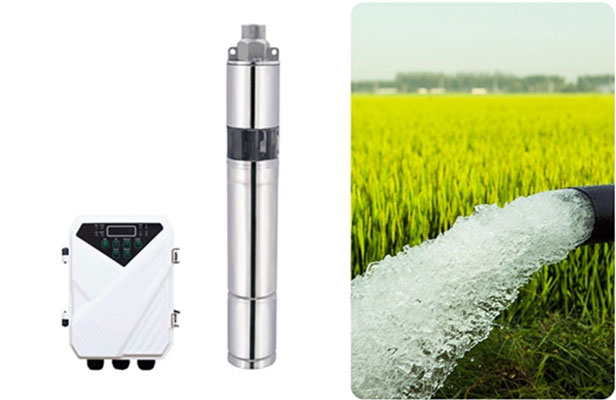
One of the most significant continuous energy costs for farmers is irrigation. The fuel costs for diesel pumps can be high, and regular fuel purchases are necessary; the power costs for electric pumps may be an additional expense on the monthly power bill. Those expenses are even more difficult to manage if fuel and electricity prices increase.
A solar water pump could be a cost-effective solution to minimize these costs, as it harnesses the energy of the sun to drive the irrigation system. The system can, once installed, pump water without the costs of dealing with fuel on a day-to-day basis, as with diesel pumps. This can benefit farmers by reducing the costs of their regular operations while still providing adequate water for their crops.
Additionally, solar water pumps can save on maintenance expenses in some cases due to the fact that they will not use the same parts as diesel water pumps, such as fuel, oil, and engines. The farmers may thus be able to reduce their long-term irrigation expenses and gain control of their pumping costs with a change to a solar-powered system.
How Solar Water Pumps Reduce Energy Costs for Farmers
The running costs of an irrigation solar water pump can add up for farmers. Diesel pumps will need fuel to be purchased, and electric pumps can add to monthly energy costs. Other options are the solar water pump, which requires energy from the sun, and, of course, diesel pumps, which also cost energy.

Here are a few of the primary methods solar water pumps can help reduce irrigation costs:
- Reduced running costs: Diesel pumps need fuel when they are used. Solar pumps require sunlight as an energy source and can help to save regular fuel costs.
- Eliminate daily fuel costs: After installing a solar pumping system, farmers will not have to purchase diesel each time they want to pump.
- Smaller exposure to fuel price changes: Carrying out irrigation with a diesel pump can be unpredictable because of variation in fuel prices. The cost of a day’s fuel is not the same with solar energy.
- One-time investment, continued savings: The solar panels, pump, and installation come with an upfront cost but can help lower ongoing costs for energy over time.
- Reduce maintenance costs: Solar pumping systems have fewer components associated with fuel as compared to diesel pumps, and these components can be part of maintenance costs.
In the simplest terms, farmers invest in the solar pumping system, rather than having to pay for fuel or electricity each time they need to lift water. These reduced costs can add up over time.
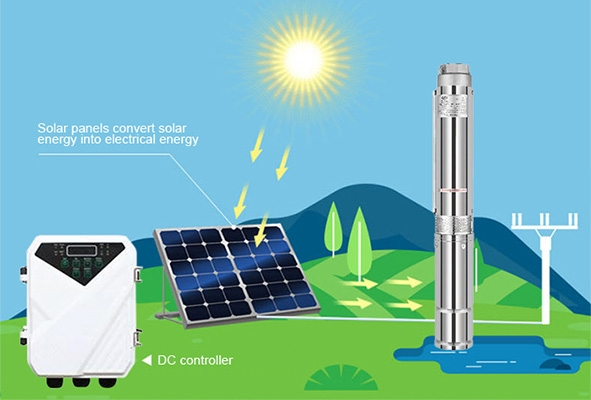
How Solar Panels, Controllers, and Water Pumps Work Together
The pump is not the only factor to take into account when choosing a solar water pump. The solar panels, controller, and pump should operate in unison.
The three components are
- Solar panels: Convert sunlight to electric power for the pumping system.
- Controller: Regulates the voltage supplied to the pump and can incorporate a feature known as MPPT (Maximum Power Point Tracking), which makes it better use the available solar energy as the sun changes.
- Water pump: Applies the electrical energy produced by the system to pump the water from the well, pond, tank, or other source.
The components need to be configured appropriately. If the system is poorly sized:
- Panels may not provide enough power to operate the pump properly.
- If the controller is the wrong type, it may not be able to provide the pump’s electrical needs.
- The pump might not be performing at its optimum.
- The system may shut down sooner than anticipated due to weaker sunlight.
So it’s important for farmers to consider the whole pumping system when selecting a pump rather than just the horsepower or wattage.
The real question is not “How powerful is the pump?” But “Is the pump system sized for the water, depth, and available sunlight in the system?”

How Much Solar Water Pump Do You Actually Need?
The correct pump size is determined by the volume of water required, the distance the pump is required to transport the water, and the amount of sunlight available. A bigger pump is not necessarily a better pump! If the system is too powerful, then you could be investing in equipment that is more than you need. It does not have to be large enough to get the job done if it is too small.
The table below is a good starting point, but not a definitive sizing guide:
| Use Case | Typical Depth (Head) | Daily Water Need | Rough Pump Size |
| Small home garden/fountain | Under 30 m | 300 – 500 gallons/day | 80 – 120 W |
| Household water supply (well) | 30 – 60 m | 500 – 1,200 gallons/day | 500 W – 1,100 W |
| Small livestock/poultry farm | 30 – 100 m | 1,000 – 3,000 gallons/day | 1,100 W – 1,500 W |
| Crop irrigation (small plot) | 20 – 80 m | 3,000 – 8,000 gallons/day | 1.5 kW – 4 kW |
| Large farm irrigation | Varies, often 50 m+ | 8,000+ gallons/day | 4 kW – 5.5 kW+ |
To remember the concept of head, you can imagine that it’s not just the depth of your well. This involves not only the vertical fall of the water but also losses due to pipes, fittings, and other components of the system.
For instance, if the water must be pumped up a hill or through a long narrow pipe, the pump with the 56-meter head might not produce the flow rate anticipated. These extra losses must be taken into account when designing the system.
Don’t Choose a Solar Water Pump by Wattage Alone
The power rating of the pump (in Watts) indicates a pump’s electrical power consumption and does not indicate how much water the system will deliver under the specific operating conditions you have.

Here’s what matters:
- Head: the pump must have adequate lift.
- Flow rate: This indicates the amount of water that the pump can pump in a certain amount of time.
- Affecting the actual flow to the field or storage tank, pipe losses occur when the pipes are long or narrow.
- Available sunlight: The amount of sunlight varies during the day and with the weather.
- Irrigation water requirement: Your pump must be able to supply the water to meet the crops’ irrigation requirements.
For instance, if you have to pump 20–25 gpm from 70 feet, you must select the pump that can pump that amount of flow at that head. A high-wattage pump does not ensure that it is sufficient for the requirement.
The Simple Fix
When you are looking for the best solar water pump, there are three crucial numbers to consider before purchasing:
- Head: How high the pump needs to raise the water.
- Flow rate: the amount of water that you require to move.
- Sunlight hours: the amount of useful sunlight available for pumping.
Consider these requirements when choosing the pump, controller, and solar panel sizes, and you’ll be much more likely to achieve the performance you need
How Solar Water Pumps Handle Changing Sunlight
A solar water pump can work even in cloudy weather. A system may be designed to respond to the different amounts of light.
- Sunnier days: The pump will run more powerfully and will pump the water faster.
- Cloudy or hazy days: During these days, the solar power also reduces, and the controller can reduce the pump speed but still pump the water.
- Sunrise and sunset: If the solar power is low, it will gradually increase the speed of the pump or decrease the speed as more solar energy is available.
- This flexibility is important, since the actual weather is variable. What works well in perfect sunlight conditions can be problematic in the event of extended periods of cloudy or hazy weather when you need water.
The purpose is not to have the pump operating at maximum capacity for 24 hours. It is there to maximize the use of solar energy that is available.
DC vs. AC Solar Water Pumps: Which One Fits Your System?
Generally, there are 2 choices to make, and depending on the system size and requirements, the choice is valid.
- DC solar pumps: These are typically easier to install with smaller systems and are directly connected to the solar panels. They can be used in houses, gardens, livestock, and on small farms where the water requirements are moderate.
- AC solar pumps: Pump large AC pumps by powering them with a solar pump inverter. They are usually more appropriate for larger irrigation systems, deeper wells, and larger farms with increased pumping power requirements.
Already have an AC pump? This may not need replacing. In some cases, an existing AC water pump may be able to be operated by solar energy in an inverter-based solar system.
When purchasing a new pump, see what you have. It could be a new inverter and solar system, not a new pumping system.
It’s quite easy: choose the setup depending on water demand, pump size, and the already installed equipment, and it’s not AC/ DC.
Solar Water Pumps Need Less Maintenance
Engines and fuel are needed for diesel pumps. Engines, fuel, oil, and regular maintenance come with diesel pumps. Much of that day-to-day maintenance is eliminated by solar pumps.
- No oil changes: No oil to change in the engine.
- No filters for diesel: Filters used for diesel fuel do not have to be cleaned or replaced.
- More silent: Solar pumps are quieter than diesel pumps.
- Low-maintenance: Solar panels usually do not need excessive maintenance; just occasionally cleaning them of dust and dirt is sufficient.
Periodic controller inspection: Periodically inspect the controller for dust build-up, loose wires, or damaged seals.
All in all, solar pumping tends to save more in terms of maintenance costs and fewer engine problems as compared with a diesel pump.
Now it’s just a matter of maintenance, but generally it’s not nearly as involved: simply clean the panels, inspect the connections, and make sure the controller is in working order.
Safety Notes Worth Actually Reading
There are several tests that can be completed that will help prevent later hassles and problems:
- Cover the controller: Keep it in a cool, dry place out of direct sunlight. It can also have a shorter lifespan when exposed to direct sunlight, rain, and moisture.
- Do not allow the pump to run dry: If there is no water, don’t run the pump. If the pump is not designed to do so, dry running could result in damage to the motor.
- Check the voltage: Make sure the voltage produced by the solar panel is appropriate for the controller. If a mismatch occurs, the controller won’t be covered under warranty and will become irreparable.
- Inspect cable insulation of submersible pumps: Before inserting a submersible pump in a well, check the submersible pump cable insulation. Even the smallest crack can allow water to enter, leading to serious problems with the electrical system in the future.
These are basic tests that can be done in a relatively short time, but which can save you the trouble of needless repairs and extend the useful life of your solar pumping system.
4 Things That Can Hurt Solar Water Pump Performance
While size is important, other factors can also have an effect on the performance of a pump. These are some of the most common errors to avoid:
- Shade: Shade from a tree, a building, or any other obstacle will decrease the production of your solar panels, even if it is just partial shade.
- An alternative to storing water is to pump water when the sun is available and then use it later when it’s needed.
- Opting for the lowest price: A low-cost controller may not be as efficient and can have a negative impact on the system’s performance.
- Do not skip a test run: If it is a permanent installation, test the system prior to installation. A brief trial can determine wiring, controller, or sizing problems before they become a major problem.
The best solar pumping system is not one that is simply a high-powered pump. It’s just about the proper panels, controller, pump, and configuration.
Finding the Right Solar Water Pump for Your Situation
It’s not always the biggest and most powerful solar water pump that’s best. It is the one that fits your water needs, pumping height, flow rate, available sunlight, and your current irrigation system.
For farmers, it is not just simply about replacing a diesel pump with a solar pump. The objective is to design a system that will provide the amount of water needed and minimize the continued energy expense of irrigation.
Consider the following before you select a solar product: Well or water source, flow rate, total pumping head, daily water demand, and available sunlight. After that, ensure that the solar panels, controller, and pump are matched.
If you want to delve into the nitty-gritty details of the actual pump models, flow rates, depth ratings, types of DC or AC pumps, and controller options, then the complete collection of solar water pumps is for you, and you can pick one based on your existing irrigation needs.
Avoid purchasing the largest pump! Purchase the correct system.
A proper setup can help you lower your energy bills, make the system easier to maintain and make the irrigation system less reliant on diesel or unreliable grid power.