

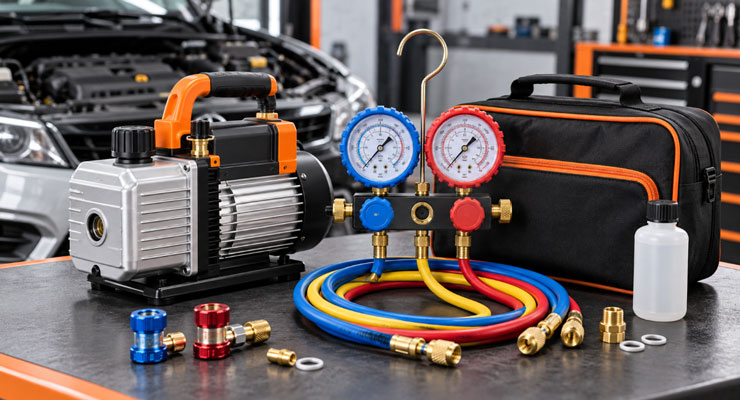
Recharging a car AC system is not always as simple as adding refrigerant. If the system has been opened for repair, air and moisture can enter the refrigerant circuit. Those contaminants need to be removed before fresh refrigerant is added. That is where an automotive AC vacuum pump becomes an important part of proper AC service.
A vacuum pump does not add refrigerant to the vehicle. Its job is to remove unwanted gases and moisture from the system so the refrigerant circuit is ready for charging. This step becomes especially important after component replacement, leak repair, or a complete loss of refrigerant. The EPA also distinguishes between simply topping off refrigerant and evacuating the system before a recharge.
What Happens Inside an AC System Before Recharging
An automotive AC system is designed to operate as a sealed circuit. When that circuit is opened, outside air can enter along with moisture from the surrounding environment. Air is a non-condensable gas, while moisture can create problems inside the refrigerant circuit. Neither belongs in a properly prepared system.

A vacuum pump lowers the pressure inside the system and removes these unwanted contents. As pressure drops, moisture becomes easier to remove from the system. The pump continues drawing gases through the service connection until the desired vacuum level is reached. This gives the technician a cleaner starting point before refrigerant is introduced.
Why Moisture Is a Bigger Problem Than It Looks
Moisture may seem harmless because it is present in normal air, but it can cause trouble inside an AC circuit. It can contribute to corrosion and may interact with refrigerant and lubricant under operating conditions. Moisture can also freeze in certain parts of the system and interfere with refrigerant flow. That is why evacuation is an important part of service after the system has been exposed to air.
Using a vacuum pump for R134a helps remove this moisture before charging. The goal is not simply to make the gauge show a vacuum. The system should also be able to hold that vacuum when the pump is isolated. A stable vacuum provides useful information about the condition of the connections and system before refrigerant is added.
When You Actually Need to Pull a Vacuum
Not every AC service requires a complete evacuation. If a system is still sealed and only needs a correctly performed refrigerant adjustment, the procedure can be different. But once the refrigerant circuit has been opened, evacuation becomes much more important. Component replacement, major leak repair, or a system that has lost its charge can all create a reason to evacuate.
The condition of the system should be checked before connecting the pump. A vacuum does not repair a mechanical leak. It only helps identify whether the system can maintain a low pressure after evacuation. If the vacuum quickly rises after the pump is isolated, the technician should investigate the connections or the system itself before charging.
Choosing the Right Pump for Automotive AC Work
Pump selection should be based on the type of work you perform rather than choosing the biggest motor available. CFM describes how much gas the pump can move, while ultimate vacuum describes how deeply it can evacuate. These are different measurements and both matter. Current automotive pump guides commonly place smaller automotive systems in the practical range of roughly 3 to 5 CFM, while higher flow can make sense for larger workloads.
For occasional vehicle service, a compact single-stage unit can be practical when its specifications match the job. A two-stage pump can provide a deeper vacuum and may be useful when evacuation quality is a priority. The important point is to look beyond the CFM number. Pump design, oil condition, fittings, hose quality, and the ability to maintain vacuum all affect the actual result.

Single Stage or Two Stage?
A single-stage pump uses one compression stage to move gases out of the system. It is generally simpler and can work well for many routine applications. Two-stage designs use an additional stage to achieve a deeper vacuum. That can be useful when removing moisture thoroughly is a major concern.
For example, several manufacturers offer AC vacuum pump configurations, including single-stage units and two-stage models. Product ranges can include everything from compact automotive-focused pumps to higher-capacity options. The right choice depends on the vehicle, service frequency, available equipment, and the vacuum level required for the job.
CFM Is Not the Only Number That Matters
It is easy to assume that a higher CFM pump will always produce a better result. That is not necessarily true. CFM mainly affects how quickly the pump can move gas, while the ultimate vacuum indicates how low the pump can pull pressure under suitable conditions. A well-matched pump with good hoses and fresh oil can be more useful than an oversized pump connected through poor equipment.
For automotive work, the evacuation path also matters. Long hoses, restrictive fittings, leaking couplers, and valve cores can slow evacuation or make the system appear worse than it is. This is why the complete setup should be considered rather than judging a pump by its motor rating alone.
Features Worth Checking Before You Buy
Oil management is one of the first things worth checking. Vacuum pumps use oil during operation, and contaminated or incorrect oil can affect performance. An oil sight window makes it easier to check the level before and during use. A drain system also helps when old oil needs to be removed.
Backflow protection is another useful feature. When a pump is switched off, you do not want pump oil moving back toward the AC system. A 12 CFM two-stage model, for example, may include an oil no-flow-back design, oil viewing window, heat dissipation system, and portable handle. These details can make routine service easier when the equipment is used correctly.
How to Prepare the AC System for Evacuation
Before starting the pump, make sure the vehicle is parked safely and the engine is off. Connect the manifold gauge set to the correct service ports and inspect the hoses and couplers. If refrigerant remains in the system, it needs to be recovered using appropriate recovery equipment before opening the circuit. Refrigerant should not simply be released into the atmosphere.
Once the system is ready, connect the vacuum pump through the manifold setup. Check the pump oil level and confirm that the hoses and fittings are tight. Open the required manifold valves according to the service procedure for the equipment. Then start the pump and monitor the vacuum rather than relying only on how long the pump has been running.
The Basic Evacuation Process
The pump should continue running until the system reaches the vacuum level required for the service procedure. Time alone is not a reliable measurement because system size, moisture content, hose length, temperature, and equipment condition can all affect evacuation. This is why technicians often monitor vacuum rather than simply using a fixed running time. A deep and stable vacuum is more meaningful than an arbitrary number of minutes.
After evacuation, isolate the system from the pump and watch the gauge or vacuum measurement. If the vacuum holds, the system has passed an important part of the preparation process. If it rises noticeably, check the connections and investigate possible leaks or remaining moisture. Do not rush into charging simply because the pump has already run.
What to Check Before Adding R134a
The refrigerant type must match the vehicle manufacturer’s specification. R134a and newer refrigerants such as R1234yf are not interchangeable simply because the service equipment looks similar. Always identify the refrigerant specified for the vehicle before connecting a charging source. EPA information also notes the distinction between HFC 134a equipment and equipment designed for HFO 1234yf.
The charge amount matters too. Automotive AC systems are designed around a specific refrigerant quantity, so guessing the amount can lead to an incorrect charge. A scale can help when the refrigerant is being added from a cylinder or container. The charging procedure should follow the vehicle service information and the equipment manufacturer’s instructions.
Common Mistakes That Can Ruin the Job
One common mistake is connecting the vacuum pump and assuming the job is finished once the gauge reaches a low reading. The system should be isolated and observed afterward. Another mistake is using old or contaminated pump oil. Dirty oil can reduce pump performance and may also increase the amount of oil mist produced during operation.
Another issue is using the wrong refrigerant or assuming every vehicle uses R134a. Vehicle systems have changed over the years, and the correct refrigerant must be confirmed before service. It is also a mistake to treat vacuum evacuation as a substitute for leak diagnosis. A vacuum test can provide useful information, but proper leak detection may require additional tools and procedures.
How to Get Better Results From Your Pump
Keep the vacuum hoses as short and direct as practical. Inspect the seals on couplers and manifold connections before each job. Make sure the pump has the correct oil level and use the oil type recommended for the pump. These small checks can prevent a good pump from being limited by the rest of the setup.
If you work on AC systems often, keeping your equipment clean is just as important. Replace contaminated oil and inspect hoses for damage. Store the pump in a dry location and protect its service connections from dirt. Good maintenance helps keep the evacuation process consistent over repeated jobs.
Final Thoughts Before Your Next AC Recharge
A recharge is only one part of proper automotive AC service. When a system has been opened, the air and moisture inside it need to be addressed before fresh refrigerant goes in. A suitable automotive AC vacuum pump gives you the equipment needed to perform that evacuation step correctly.
The best pump is not automatically the largest one. Look at CFM, vacuum depth, pump stages, oil management, fittings, and the type of work you actually perform. For users considering a vacuum pump for R134a, matching the equipment to the vehicle and service procedure matters more than chasing a single specification. When the system is properly evacuated, checked, and charged according to its specifications, the entire AC service starts from a much better position.
FAQs
Can I recharge R134a without using a vacuum pump?
If the system remains sealed and only needs an appropriate refrigerant adjustment, a full evacuation may not be required. If the system has been opened or exposed to air, evacuation is generally an important part of preparing it for recharge.
What does an automotive AC vacuum pump remove?
It removes air, moisture, and other gases from the AC circuit. This prepares the system for refrigerant charging and helps reduce contamination inside the system.
Is a two-stage pump better for R134a?
A two-stage pump can pull a deeper vacuum than many single-stage designs. Whether you need one depends on the vehicle, service requirements, and the level of evacuation your work calls for.
How much CFM do I need for automotive AC?
Many automotive applications can be handled by pumps in the roughly 3 to 5 CFM range. Larger capacity can be useful for heavier workloads, but CFM should be considered alongside vacuum depth and the rest of the evacuation setup.
Can a vacuum pump find an AC refrigerant leak?
It can help show whether a system holds vacuum after evacuation, but it does not replace proper leak detection. If the vacuum rises after isolation, the connections and system should be checked before charging.