

Gila Herald Staff Reports
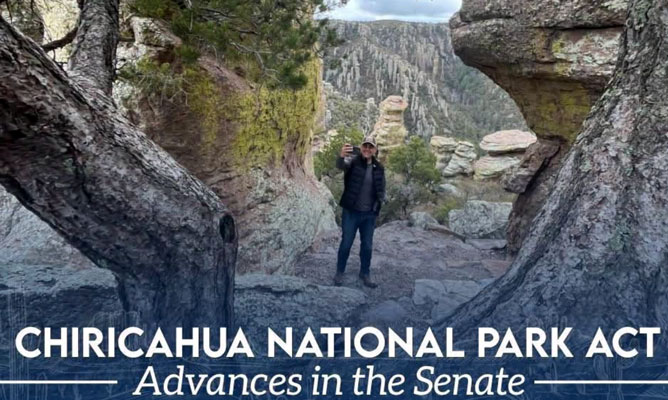
WASHINGTON — U.S. Rep. Juan Ciscomani’s legislation to designate the Chiricahua National Monument as a national park reached a major legislative milestone after successfully advancing through committee in the U.S. Senate.
The bipartisan Chiricahua National Park Act (H.R. 6380) seeks to reclassify the iconic 12,000-acre site in Cochise County into Arizona’s fourth official national park, joining the Grand Canyon, Saguaro, and Petrified Forest national parks. In March, the legislation passed the House of Representatives and was sent to the Senate.
What the Act Does
Often referred to as the “Wonderland of Rocks,” the 102-year-old monument features dramatic rhyolite rock pinnacles, rich biodiversity, and deep historical significance as the ancestral homeland of the Chiricahua Apache.

If enacted into law, the bill will:
- Elevate National Profile: Formally rebrand the monument as Chiricahua National Park, raising its visibility among national and international travelers.
- Boost Rural Economies: Expand tourism and outdoor recreation across southeastern Arizona, supporting local businesses, hotels, and restaurants in Cochise and Graham counties.
- Preserve Cultural Access: Protect traditional cultural and religious sites within the park while guaranteeing access for Native American tribes for customary uses.
- Maintain Land Management: Transition designation without disrupting existing land management practices or public access rules.
Next Steps to Become Law
Having cleared both the House of Representatives and the Senate Energy and Natural Resources Committee, the bill faces its final legislative hurdles before reaching the president’s desk:
- Senate Floor Vote: The legislation must be called up for a full vote on the Senate floor. Companion efforts backed by Arizona Senators Mark Kelly and Ruben Gallego have helped build bipartisan momentum.
- Reconciliation (If Needed): If the Senate amends the text, both the House and Senate must agree on the identical version.
- Presidential Signature: Once approved by both chambers in identical form, the bill goes to the president to be signed into law.