
by Juan Manosalva/Cronkite News
CHARLOTTE, N.C. – Twelve days before its 2026 FIFA World Cup opener, the United States delivered one of its most complete performances under Mauricio Pochettino.
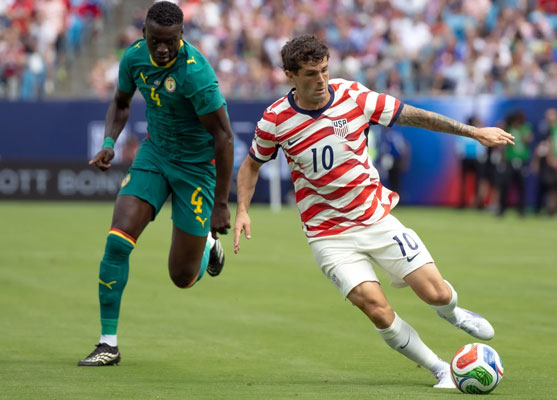
Christian Pulisic ended a five-month scoring drought and added an assist in Sunday’s 3-2 victory over Senegal, a team that was outscored just once in its previous 21 matches.
But the victory was not perfect.
Defensive mistakes remained a concern. The U.S. let an early 2-0 lead slip away, looked vulnerable in defensive transitions, and failed to firmly put the game away when it had the chance.

But between Pulisic’s resurgence, an explosive attack, initiative to control the game, and a tactical performance that reflected Pochettino’s vision, the U.S. walked away with exactly what it needed most: confidence.
“Always it’s better to win,” Pochettino said after the game. “It’s important to get good feelings. Overall, it was a positive day, but we are conscious now about things that we need to improve.”
The Americans controlled possession for long stretches, pressed Senegal high up the field and generated five goals overall, though two were disallowed. Senegal coach Pape Thiaw admitted afterward that the intensity caught his team off guard.
“We like to play with the ball, but the U.S. surprised us by taking the ball from us and being extremely aggressive, which didn’t make us look good because we weren’t expecting that,” Thiaw said.
For a team still fine-tuning ahead of its World Cup opener against Paraguay on June 12, the match offered the clearest picture yet of how Pochettino wants the U.S. to play – and a number of insights into how the tournament could unfold.

Charlotte delivers a World Cup atmosphere
For one afternoon, Charlotte provided a glimpse of what the World Cup could look like this summer.
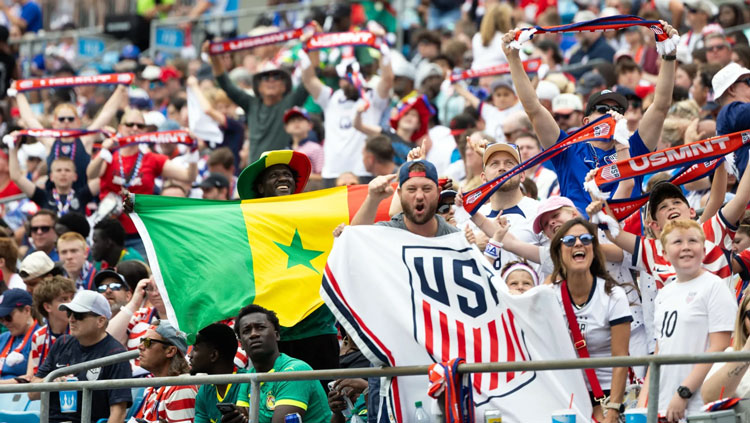
The announced crowd of 57,741 nearly filled the 75,000-seat Bank of America Stadium.. Most of the fans backed the United States, though thousands of Senegalese fans were on hand, too, creating an atmosphere players repeatedly mentioned after the match.
“It was electric,” Pulisic said.
“The energy today in Charlotte was incredible,” center back Mark McKenzie said. “To walk into the stadium and feel that was huge, and it gave us a boost in large periods of this game.”
The large turnout for a mere tune-up match also showed the depth of the U.S. fan base.
“To see 60,000 people out there supporting us, it’s a testament to their belief in not only us as a senior team but across the federation – the youth national teams all the way up to the women’s national team,” McKenzie said.
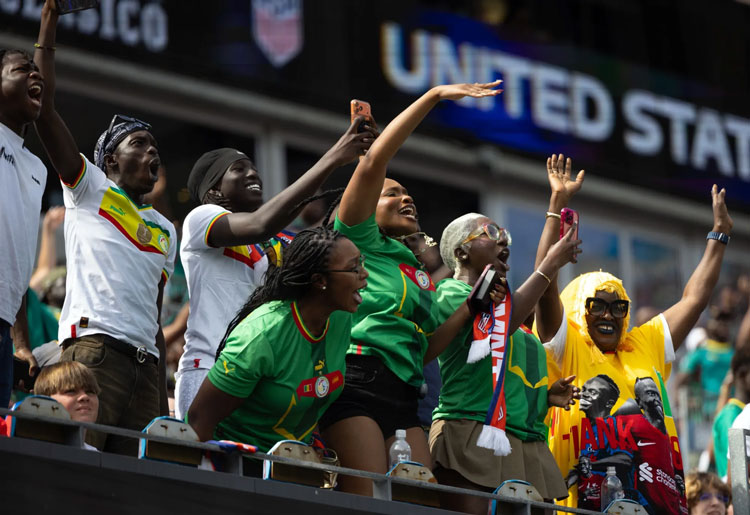
The support was extended to Senegal as well. Thiaw called the turnout from the Senegalese diaspora in the United States “extraordinary.”
“It is a pleasure to know that we have a large community here in the United States,” he said. “These are people who love their country and love their national team. Everywhere we go, we see them, and they come out to visit us.”
Pulisic ends drought, sparks the attack
Pulisic entered Sunday without a goal in five months.
By halftime, the AC Milan forward had reminded everyone why he remains one of the most important players in the American attack.
The opening goal came in the seventh minute after the U.S. quickly moved the ball through midfield. Pulisic found Sergiño Dest arriving from the right, and the PSV Eindhoven wing-back finished the move to give the Americans an early lead. Pulisic has notched plenty of assists since his last goal, but the pressure remained high on “Captain America.”
Just 13 minutes later, Ricardo Pepi played a perfectly weighted pass behind Senegal’s defense. Pulisic timed his run, rounded goalkeeper Mory Diaw and calmly finished with an empty net to double the U.S. advantage – ending a scoring drought that dated back to his last goal for AC Milan on Dec. 28.
As soon as the ball crossed the line, Pulisic’s body language told the story: relief rather than wild celebration in the clenched fists and primal scream.
“That was what he needed. I’m so happy for him, so happy for everyone,” Pochettino said. “After a long time without scoring, it’s important for our players knowing the preparation for the World Cup.”

McKenzie said Pulisic’s breakthrough felt inevitable.
“It was always brewing,” he said. “It was on the horizon, and it was just a matter of getting over the line.”
Doubts linger on the starting lineup
The U.S. attack gave fans plenty to cheer for, but it didn’t end the dilemma facing Pochettino: who to start in the No. 9 role for the U.S. Men’s National Team when the World Cup begins?
Pepi and Folarin Balogun offered two very different alternatives, giving the coach flexibility depending on the opponent and game situation.
Pepi frequently dropped into midfield, drifted into wide spaces, and made diagonal runs behind defenders. His movement created space for teammates and helped connect the attack. His assist on Pulisic’s goal highlighted his ability to create as well as finish.
Balogun, meanwhile, looked every bit the penalty-box striker.
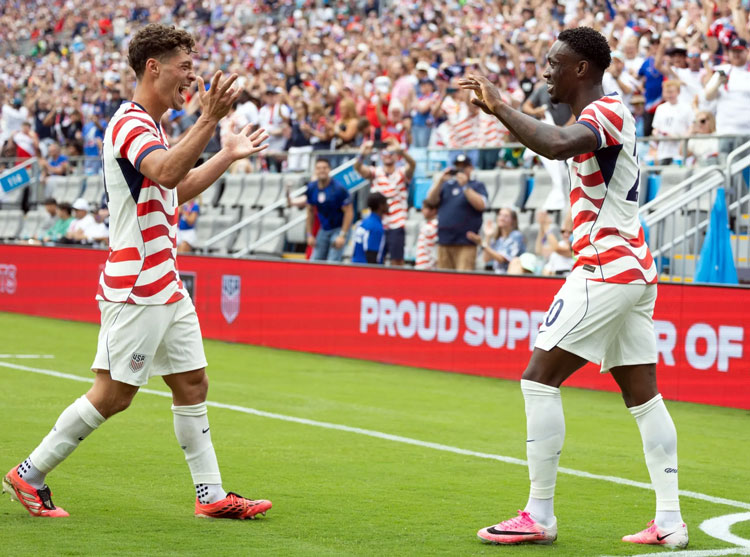
Monaco’s forward consistently occupied center backs, attacked dangerous spaces inside the area, and finished clinically when opportunities arrived. After Senegal fought back to a 2-2 tie, Balogun restored the lead with the eventual game-winning goal. He also had another goal disallowed and was involved in several dangerous attacking sequences.
Midfielder Weston McKennie credited familiarity for the chemistry the group showed in the final third.
“We’ve all played together countless times, and we all know what we like,” he said. “The more you know your players and the more you get what they like and don’t like, I think it makes it much easier to play.”
The performances reinforced something Pochettino has emphasized throughout camp – the value of flexibility and options.
“We saw the commitment of everyone there,” he said. “We have players that have enormous talent. But the important thing … is also for the fans that really believe in us.”
Pochettino’s vision emerges
Beyond the win, Sunday’s performance may have been the strongest example yet of what Pochettino wants the USMNT to become.
The Americans pressed aggressively, won the ball high up the field, and consistently looked to attack quickly once possession was recovered. The approach disrupted Senegal’s rhythm and prevented one of Africa’s strongest teams from controlling possession
“We are a team that likes to have the ball,” Thiaw said, and “we didn’t have it very much.”
McKenzie said adaptability remains central to the team’s identity.
“It’s all about what the game calls for,” he said. “Sometimes it’s playing out of the back, sometimes it’s being more direct. Honestly, it’s playing for what the game calls for. We adapt depending on the rival.”
The U.S. not only controlled large stretches of the match but also created significantly more danger in front of goal than Senegal did. In addition to its three goals and the two more finishes ruled out, it hit the post once.
McKennie said converting chances was one of the biggest differences from previous performances.
“We tend to, for 35 or 40 minutes, dominate a game and have high pressure,” he said. “What was different this time is that we converted on the chances that we had.”
Defensive concerns remain
As impressive as the attack looked, the match also reinforced concerns that still surround the U.S. defense.
Senegal scored twice despite spending long stretches without control of the game.
Sadio Mané cut the deficit before halftime and later capitalized on another defensive mistake to level the score at 2-2.
When asked how Senegal generated its opportunities, Pochettino pointed directly to his own team’s errors.
“Through our mistakes,” he said. “Of course, they have quality and very good players.”
McKenzie identified defensive transitions as one of the areas requiring improvement.
“Playing out of the back comes with some risk. Being strong in that defensive transition against attackers and teams that can hurt you will be important,” he said.
Midfielder Tyler Adams echoed that assessment.“There’s a lot of pieces that we can still do a lot better. I think we could have also scored more goals,” he said.
Competition remains open
After a strong first-half performance, Pochettino replaced 10 of the 11 starters, spreading the playing time throughout the roster.
The move by the Argentine coach reflected both the depth of the roster and the competition that still exists within the squad.
Pochettino highlighted midfielder Sebastian Berhalter as an example.
“He’s a monster in how professional he is,” Pochettino said. “He deserved to be in the roster.”
The internal competition may be one of the team’s biggest strengths.
“Everybody needs the ability to go out there and showcase what they can do,” McKenzie said. “It shows the collective group that we have, the 26 guys all pushing in the same direction.”
McKennie viewed the coach’s wholesale changes as a reflection of a healthy internal competition.
“Every player is here with a common goal, a common mission,” he said. “Everybody wants to show that when that first 11 goes out there, they want to be part of it.”
Senegal leaves Charlotte with questions
Senegal arrived in Charlotte with the expectations of a team widely considered among Africa’s strongest World Cup contenders.
The Lions of Teranga had won their past seven games and all but one of the past 30. They were eager to make a statement after months of controversy.
In March, the Confederation of African Football stripped them of the Africa Cup of Nations title, ruling they had forfeited a 1-0 victory over Morocco after walking off the field to protest a penalty call.
Thiaw admitted that Sunday’s game didn’t unfold as hoped. The U.S. dictated much of the match. Senegal struggled to establish possession, found little rhythm in midfield, and spent long stretches defending against waves of pressure.
“We weren’t expecting that. It definitely made us look uncomfortable,” Thiaw said.
Senegal’s coach credited the Americans’ intensity with making his team uncomfortable and preventing the possession-oriented game for which it had prepared. Despite the defeat, he expressed confidence that Senegal’s supporters would continue backing the team as it prepares for the World Cup.
“Now, it is up to us to make them proud, win our matches, and have a great World Cup,” he said. “I believe the diaspora here in the United States supports us deeply.”
The defeat does little to change expectations surrounding the Lions of Teranga, though they left Charlotte with plenty to analyze.
Senegal’s final opportunity to make adjustments comes June 9 in a friendly against Saudi Arabia before opening its World Cup campaign June 16 against 2022 runner-up France.
A step forward before Germany
The United States now turns its attention to Chicago. A friendly with Germany at Soldier Field on June 6 will provide one final tune-up before its tournament opener with Paraguay on June 12 – a final measuring stick to show that Sunday’s performance was not an exception.
There are still “obvious things that we need to improve,” Pochettino said, but the signs on Sunday were encouraging.
Players agreed.
“We wanted to come out with a lot of energy,” captain Tim Ream said. “We wanted to set the tone for what the summer could be for us.”