
Staff Reports
WASHINGTON D.C. – In a rare display of unanimous agreement, the U.S. Senate has passed a bipartisan resolution introduced by Senators Mark Kelly (D-AZ), Catherine Cortez Masto (D-NV), John Curtis (R-UT), and Jacky Rosen (D-NV) recognizing the week of April 20, 2026, as National Dark Sky Week. The measure honors the special places across the United States where minimal light pollution allows for pristine night skies ideal for stargazing, scientific observation, and reconnecting with the cosmos.
The resolution highlights the cultural, scientific, educational, and economic value of dark skies while calling attention to the growing problem of light pollution. It encourages conservation efforts so that future generations can experience the wonder of a star-filled night sky.
Arizona: A National Leader in Dark Sky Preservation
Arizona stands out as a beacon in the dark sky movement. The state is home to Flagstaff, the world’s first International Dark Sky City, designated in 2001 by DarkSky International (formerly the International Dark-Sky Association). Flagstaff pioneered strong outdoor lighting ordinances that have served as a model for communities worldwide.
The state also boasts iconic sites such as:
- Kitt Peak National Observatory, one of the largest collections of optical telescopes in the world, is located on the Tohono O’odham Nation.
- Grand Canyon National Park is certified as an International Dark Sky Park, where visitors can experience some of the darkest skies accessible to millions of people annually.
Arizona leads the nation with more IDA-certified dark sky sites than any other state, making it a premier destination for astronomers, astrophotographers, and casual stargazers alike.
Senator Mark Kelly, a former NASA astronaut, emphasized the personal and broader significance: “I’ve seen the stars from orbit, but you don’t have to be an astronaut to look up and feel that same curiosity. There’s nothing quite like a clear night sky, and Arizona has some of the best in the country. Dark skies inspire kids to study science, bring economic development to our rural communities, and connect us to something bigger than ourselves. That’s worth protecting.”
Nevada’s Dark Sky Treasures
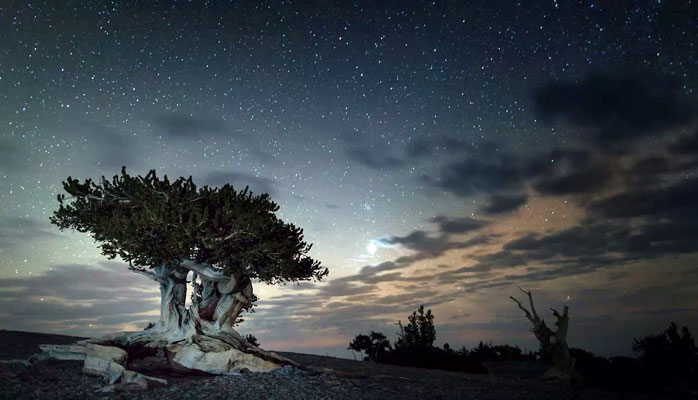
Nevada also features outstanding dark sky locations. Great Basin National Park is recognized as one of the darkest places in the contiguous United States and holds International Dark Sky Park status. Visitors can enjoy exceptional views of the Milky Way, constellations, and deep-sky objects, often enhanced by the park’s high elevation and remote location.
The Great Basin Star Train out of Ely offers a unique rail experience for stargazing. Senator Catherine Cortez Masto linked the resolution to renewed public interest in space: “The record-breaking Artemis II mission has renewed the sense of wonder many Americans feel when looking up at the night sky. Dark sky places, including Nevada’s very own Great Basin National Park, are the ideal destinations for stargazers searching for the best views of faraway constellations and even the Milky Way.”

Senator Jacky Rosen added: “Nevada is home to some of the darkest skies in the country… I am proud to join Senator Cortez Masto in proclaiming National Dark Skies Week, highlighting one of the many wonders that Nevada has to offer and promoting conservation so the views can be enjoyed by generations to come.”
A Bipartisan Call to Protect the Night
Senator John Curtis (R-UT) stressed the connection between space exploration and earthly observation: “As we commit our physical and intellectual resources to exploring space and the stars through programs like Artemis, we should also ensure that every American can connect with our fascinating universe from here on Earth. By marking National Dark Sky Week, our resolution provides us a moment to renew our curiosity, celebrate the beauty beyond the Earth’s atmosphere, and work together to reduce light pollution.”
Why Dark Skies Matter
Dark skies deliver more than scenic beauty. They:
- Inspire scientific curiosity and STEM education in children and adults.
- Support astrotourism, which brings economic benefits to rural communities through stargazing events, festivals, and dark-sky tours.
- Protect nocturnal wildlife, whose behaviors (migration, foraging, reproduction) are disrupted by artificial light.
- Improve human health by preserving natural circadian rhythms that are disrupted by excessive nighttime lighting.
- Reduce energy waste and associated carbon emissions from poorly directed outdoor lights.
Light pollution has increased rapidly—studies show that a significant majority of people in developed countries can no longer see the Milky Way from their homes. International Dark Sky Week, typically observed in mid-April around the new moon (in 2026 falling April 13–20), encourages individuals and communities to “go dark” by turning off unnecessary lights and adopting responsible lighting practices.
Looking Ahead
The unanimous Senate passage signals broad recognition that protecting dark skies is a nonpartisan issue that bridges space exploration, environmental stewardship, public health, and economic development. While the resolution is symbolic, it amplifies ongoing efforts by DarkSky International, national parks, observatories, and local communities to combat light pollution through better lighting design—fully shielded fixtures, warmer color temperatures, and motion sensors or timers.
As Senator Kelly noted, experiencing a truly dark sky fosters a sense of awe and connection that transcends politics. In an era of rapid technological advancement and space ambitions, preserving the ability to simply look up and wonder remains profoundly important.
The full text of the resolution is available via Senate records. This April, Americans are encouraged to seek out certified dark sky places, participate in local events, and take small steps at home to help keep the night sky dark for everyone.