

Staff Reports
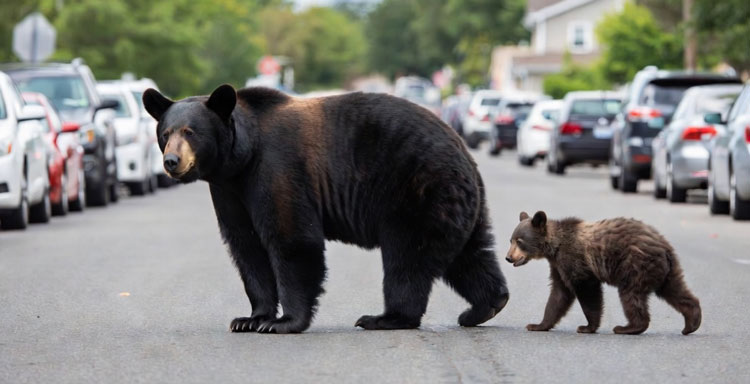
SAFFORD – A mother bear and her cub were spotted Tuesday night, April 28, walking northbound on Apricot Road in Safford. According to a Safford Police law incident media summary report, the sighting occurred around 10:44 p.m. The pair was later located near 30th Street and 13th Avenue; they were observed running west toward 14th Avenue before disappearing into the desert west of Glen Meadows Park.
Arizona Game and Fish Department (AZGFD) was notified, but no personnel were available in the immediate area to respond that night.
This latest encounter adds to a pattern of occasional black bear visits in and around Safford and nearby communities like Thatcher and Pima.

Why Bears Appear in Safford
Safford sits in the Gila Valley at the base of the Pinaleño Mountains, one of Arizona’s prominent “Sky Island” ranges. These mountains rise dramatically from the desert floor, offering a full gradient of habitats from semi-desert grasslands and oak woodlands up to high-elevation mixed conifer and spruce-fir forests above 8,500–10,000 feet. The Pinaleños support one of the densest populations of black bears in the Southwest, with some estimates historically describing the range as hosting an exceptionally high concentration of the animals per square mile.
Black bears in Arizona primarily inhabit higher-elevation woodlands and forests between roughly 4,000 and 10,000 feet, where food and cover are abundant. They are highly mobile and opportunistic foragers with an extraordinary sense of smell. Several factors can draw them downslope into valley communities like Safford:
- Natural movement and dispersal: Young bears, especially males or recently weaned cubs, often travel widely in search of new territory or mates. A mother with cubs may also move in response to food availability or pressure from other bears.
- Food and water shortages: Drought, wildfire, or poor natural forage (acorns, berries, insects, deer fawns) can push bears into lower elevations looking for water or easy meals. Recent years have seen reports of bears seeking water sources near residences or being displaced by territorial adults.
- Human attractants: Once near developed areas, unsecured trash, bird feeders, pet food, fruit trees, or grills become powerful magnets. Bears that learn to associate people with food can lose their natural wariness and return repeatedly.
Safford’s proximity—just a few miles from the mountain foothills—means bears occasionally wander through agricultural edges or desert washes into neighborhoods, especially at night or during seasonal shifts in food availability. Similar sightings have occurred over the years in Safford, Thatcher, and surrounding areas.
Arizona is home to an estimated 5,000+ black bears statewide, almost all of them the American black bear. These are not grizzlies; black bears are generally smaller, more timid, and far less aggressive toward humans when not habituated or cornered.
How to Handle Bear Sightings and Encounters
Most black bears prefer to avoid people, but encounters can escalate if bears become food-conditioned or feel threatened. The Arizona Game and Fish Department provides clear guidance for residents in bear country:
If You Spot a Bear in Your Neighborhood
- Stay calm and do not approach.
- Give the bear plenty of space and an escape route.
- Do not run — running can trigger a chase response.
- Make yourself known by speaking firmly or making noise from a safe distance so the bear is aware of you.
- Back away slowly while facing the bear. If it approaches, stand your ground, make yourself appear larger (raise your arms, open your jacket), and use loud noises, clapping, or thrown objects (rocks, sticks) to encourage it to leave.
- Never feed or attempt to approach a bear, even for photos.
- Secure all potential attractants immediately after the bear leaves: bring in bird feeders at night, use bear-resistant trash containers or store garbage in a secure building until pickup day, clean grills thoroughly, and do not leave pet food outdoors.
In a Close Encounter or Attack (Rare)
- Fight back aggressively if a black bear makes contact. Use whatever is available (sticks, rocks, fists, pepper spray if you have it). Black bears are not predatory toward humans in the same way grizzlies can be; most attacks are defensive or food-related.
- Report aggressive behavior, bears entering or damaging property, or repeated sightings in neighborhoods to AZGFD Dispatch at 623-236-7201. In immediate emergencies, call 911.
Prevention Tips
- Bear-proof your property: Use sturdy, latching trash cans (or store them indoors). Remove fallen fruit from trees and avoid composting meat or sweets.
- Keep pets supervised and on leash when outside, especially at dawn or dusk.
- Install motion-activated lights or noisemakers in problem areas.
- Talk to neighbors — one unsecured trash can can attract bears to the whole block.
AZGFD generally tries to relocate juvenile bears, but animals that repeatedly return, show no fear of humans, or pose a clear public safety risk may be euthanized. The goal is to keep bears wild and people safe by removing the food rewards that draw them into town.
Sightings like the April 28 mother-and-cub pair are a reminder that Safford lies at the edge of excellent bear habitat. By staying vigilant, securing attractants, and knowing how to respond, residents can coexist with these impressive wild neighbors while minimizing risks to both humans and bears. For the latest advice, visit the Arizona Game and Fish “Living with Bears” page or contact your local wildlife office.