
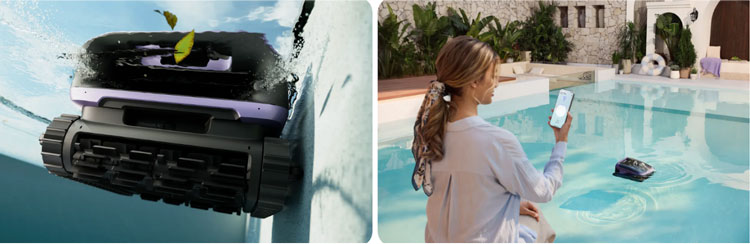
When Pool Maintenance Becomes a Constant Interruption
Pool maintenance rarely feels like a single task.
It shows up in moments.
Right before you want to swim. Just after everything else is ready. Or a few hours after you thought it was already handled. A light layer of debris, a corner that looks slightly off, a surface that doesn’t quite match the rest.
A windy afternoon resets the surface. A busy weekend shifts the water balance. What was “done” yesterday becomes something to deal with again today.

The issue is not the difficulty of cleaning.
It’s how often it interrupts everything else.
Stability Over Cycles: A Shift in How Pools Are Managed
Traditional maintenance works in cycles.
Clean, wait, repeat.
The assumption is that each cleaning cycle restores the pool to a stable state. But in reality, that stability is temporary. Conditions begin shifting again almost immediately.
This is where the shift begins.
Instead of thinking in cycles, newer approaches focus on stability over time.
Modern pool cleaning systems are increasingly designed not just to clean, but to maintain stable conditions across the entire pool environment.
This changes pool maintenance from a task into a system.
And systems behave differently.
Smarter Movement Across Complex In-Ground Pool Layouts
One of the key challenges in maintaining stability lies in how debris actually distributes.
Inground pools are not uniform environments. Steps, slopes, and depth variations create zones where particles accumulate unevenly. Some areas remain relatively clear, while others collect debris more quickly.
Traditional cleaning often treats the pool as a flat surface.
But in practice, it isn’t.
This is where newer systems are evolving.
The Beatbot Sora 70 In-ground pool cleaner reflects this shift toward more structured movement and coverage.
As a next-generation in-ground pool cleaner, systems like the Beatbot Sora 70 are designed to maintain consistent coverage across complex pool layouts without requiring repeated manual correction.
The goal is not simply to remove debris.
It is to prevent uneven buildup from forming in the first place.
The Part Most Systems Still Ignore: What Happens After Cleaning
Even when cleaning itself improves, another part of the process often remains unchanged.
What happens after.
Removing the device. Handling the filter. Dealing with accumulated debris. Cleaning components before the next cycle.
This step is rarely considered part of the “cleaning experience,” but it is often the most inconvenient.
Because it reintroduces manual effort.
And that effort is not occasional—it repeats just like the cleaning itself.
Self-Cleaning Systems and the Move Toward Zero-Contact Maintenance
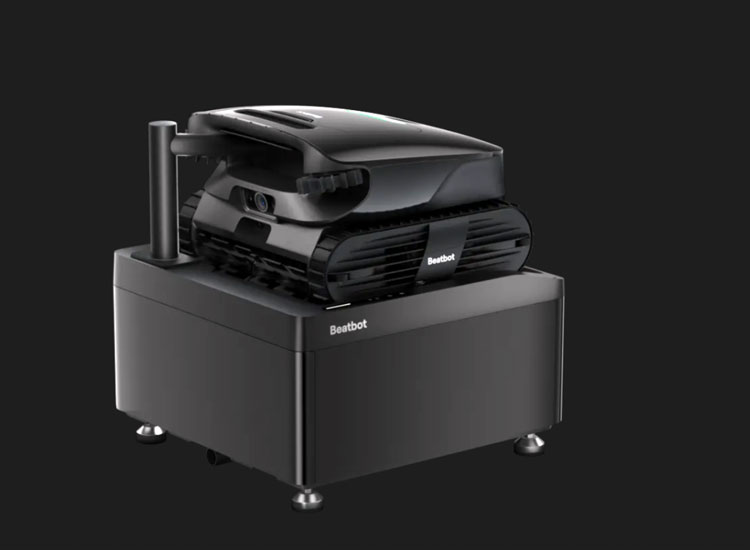
This is where the next phase of pool automation begins.
Not with stronger cleaning, but with reduced interaction.
Systems like the Beatbot AquaSense X self-cleaning pool vacuum address one of the most overlooked issues in pool maintenance—what happens after cleaning—by reducing the need for manual filter handling and post-cleaning steps.
The focus shifts from cleaning performance to maintenance simplicity.
The goal is not just clean water.
It is less involvement.
From Hands-On Tasks to Background Operation
As these systems evolve, their role changes.
They are no longer tools that require attention.
They become part of the environment.
Cleaning no longer happens at a specific moment. It runs in the background, maintaining conditions without requiring intervention.
There is no “before” and “after.”
Only continuity.
And when maintenance becomes part of the background, the need to think about it begins to disappear.
A Different Kind of Pool Ownership Experience
The result is not dramatic at first.
But it becomes noticeable over time.
Fewer interruptions. Less preparation. No need to adjust plans around cleaning. The pool is simply ready when you are.
That changes how the space is used.
Not because the pool is different.
But because it no longer demands attention in the same way.
And that is what defines the next phase of pool automation.