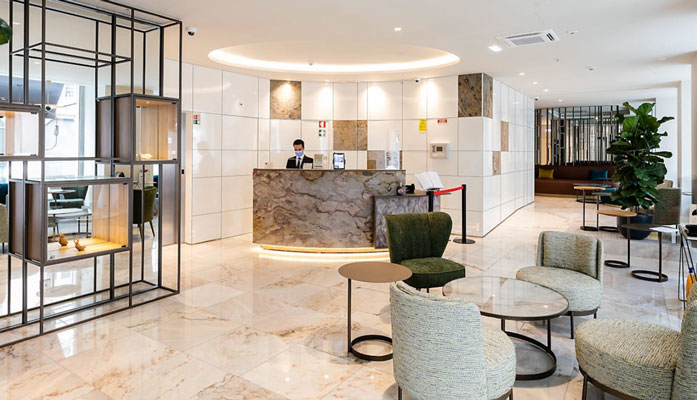
Furnishing high-traffic spaces with furniture that can withstand heavy use is more difficult than most realize.
Hospital waiting rooms, healthcare reception areas, medical clinics, and public lobbies are all bound to one thing… wear and tear. Hundreds of people sit down, move around, and lean on chairs every single day. And if those chairs can’t stand up to that kind of punishment, maintenance costs will skyrocket.
Let’s look at things from a slightly different perspective…
Cheap furniture will break, stain, and fall apart within months. Investing in furniture built for heavy traffic will last for years while keeping patients comfortable and your waiting areas looking sharp.

That’s why this handy guide was created! It outlines the features you absolutely need to keep in mind when furnishing high-traffic spaces. Understanding what to look for will make your decision that much easier.
Here’s what this guide covers…
- Durability. Why Cheap Furniture Will Never Be Cost-Effective
- Hygiene. Materials Matter When It Comes to Infection Control
- Comfort. Ergonomic Details That Don’t Go Unnoticed
- Sustainability. Durable Furniture Is The Environment’s Best Friend
- Cost. How To Save Money In The Long Run By Doing Less Maintenance
Durability – Why Cheap Furniture Will Never Be Cost-Effective
If there’s one thing that high-traffic spaces need, it’s furniture that can withstand constant abuse.
After all, healthcare reception chairs are used by hundreds of visitors every week. They don’t exactly receive ‘gentle care’ like your lounge furniture back home.
GP waiting room chairs are sat on, stood up on, wiped down with industrial chemicals, and told to ‘outlast the lease’.
For this reason alone, durability should be your number one concern. Material quality is hugely important when it comes to furniture. Steel frames will outlive wood and plastic any day because they’re more resistant to bending, cracking, and general wear & tear.
That’s why most healthcare waiting room furniture features durable beam seating. Beam-mounted chairs are made to handle just about anything you throw at them. Plus, they’re built to look professional while keeping waiting areas organized. The frame connects each chair together, preventing them from being moved around or shifted out of alignment.
Here are a few things to look for in durable furniture:
- Steel frames
- Commercial-grade upholstery that’s rated for heavy-duty use
- Weight-tested components for bariatric needs
- Legs designed to be “wall savers.”
The more durable your furniture is, the less you’ll have to spend on replacing chairs down the line.
Hygiene – Materials Matter When It Comes to Infection Control
Did you know that furniture plays a huge role in infection control?
Think about how your waiting room operates for a second…
Patients sit down, accidentally bump their elbows on the armrests, cough without covering their mouth, and leave. The next patient sits down as soon as they vacate the seat.
You can’t exactly implement “turnover time” between every patient like you can in treatment rooms. So furniture itself becomes a health and safety concern.
Materials matter more than most realize. Cloth upholstery might look nice, but it’s also a bacteria magnet that’s nearly impossible to clean. Facilities need to invest in furniture made from non-porous materials that won’t fall apart when wiped down with EPA-approved chemicals.
Recent reports show just how massive an impact furniture can have on infection control.
According to Grand View Research, the furniture market demand will reach nearly $786 billion by 2025. Part of this growth can be attributed to healthcare furniture needs. Providers are stocking their waiting rooms with wipeable surfaces and antimicrobial fabrics.
Here are infection control features to keep an eye out for:
- Furniture made from non-porous materials
- No crevices or crannies where dirt can collect
- Crumb sweeps separating the seat & backrest for easy cleaning
- Polyurethane armrests instead of exposed wooden ones
Hardwood furniture is quickly becoming extinct in clinical environments. It’s impossible to properly sanitize because the material absorbs moisture and contains natural crevices. Powder-coated metal finishes have become the new norm for a reason.
Comfort – Ergonomic Details That Don’t Go Unnoticed
Alright, durability and hygiene have been covered. But what about how furniture actually feels?
A common question is what comfort features patients actually notice. Nobody wants to spend money on chairs that look nice but feel like soggy cardboard. Here’s the truth…
Patients sit in your chairs. A lot. Waiting rooms are often packed full of people before appointments, so chairs will fill up quickly. Tolerating uncomfortable seating can cause anxiety, stress, and an overall negative impression of your business.
Here are a few of the comfort features that patients tend to notice the most:
- Seat depth and back angles provide proper lumbar support
- Chairs have padded armrests to help elderly patients
- Seat height is suitable for multiple body types
- Chairs aren’t clumped too closely together
If you try sitting in a chair for 20 minutes, you’ll understand what that means. Stylish furniture is great, but not if it causes back pain after sitting for a few minutes.
Also, remember to consider disabled access when furnishing your waiting room. Your seating doesn’t need to scream “ADA Compliant” but should be subtly designed with wheelchair users and limited mobility in mind.
Sustainability – Durable Furniture Is The Environment’s Best Friend
Here’s a surprise you probably didn’t know…
Sustainable furniture is a real thing. Tons of customers are now asking about products that pose minimal impact on the environment.
Recent studies have shown that 78% of consumers across America value living a sustainable lifestyle. The way people shop is changing to become more eco-friendly.
So how does this relate to furniture? Well…
Sustainable furniture has a few things in common.
For starters, it’s made from sustainable materials. Solid steel, recycled plastic, and low-VOC finishes are all great places to start. But another huge factor is how long your furniture lasts.
Think about it…
A chair that’s capable of lasting a decade will be more sustainable than something that can only be replaced every couple of years. Sustainable furniture should also allow you to swap out individual parts without having to throw out the entire unit. This helps limit waste and cut down on maintenance costs.
Once you purchase durable furniture, you’re already being sustainable.
Cost – How To Save Money In The Long Run By Doing Less Maintenance
Here’s a fun fact most people don’t realize.
The price you pay for a piece of furniture is only a small portion of its overall cost. Think about maintenance, cleaning solutions, repairs, and future replacements. These are things most rarely think about when shopping for furniture.
Just because something is cheap doesn’t always mean it’s inexpensive.
Cheap furniture will cost you more money over time. You might pay $50 per chair instead of $100, but they have to be replaced every year or two. If you do the math, those $100 chairs will only cost you $50 per year. Whereas $50 chairs cost you double to maintain over time.
Final Thoughts
Choosing furniture for high-traffic spaces isn’t as simple as picking the nicest-looking chairs. Healthcare reception furniture should meet your needs in terms of durability, cleanliness, comfort, sustainability, and value.
Here’s your cheat sheet…
- Durability – Chairs should be made from steel with commercial-grade materials
- Hygiene – Chairs should have non-porous upholstery that’s easy to clean
- Comfort – Chairs should have ergonomic design features that keep patients comfortable during long waits
- Sustainability – Furniture should be built to last and use sustainable materials when possible
- Value – Buying cheap furniture now costs you more money in the long run
Take your time choosing furniture, and you’ll see huge savings (and less work) down the line. It’s that simple.