

You’re slowly (but surely) running out of warehouse space, and you’ve heard that vertical storage solutions can be a lifesaver. Investing in them is a great solution. They save floor space. They make the picking process much faster. And they make your warehouse cleaner and easier to organize.
But will it fit your items? Will your software support it? What happens when it stops?
Before we start talking about the VLM vs vertical carousel debate, let’s take a step back and see if your business is ready for this change.
The market is moving fast. MHI and Deloitte found that 55% of supply chain leaders are increasing supply chain tech and innovation spending, and 42% plan to invest more than $10 million.
At the same time, the U.S. warehousing and storage sector employed around 1,835 million people in February 2026, with average hourly earnings at $26.57. That makes labor, speed, and storage use very important factors for businesses.

Today, we’ll go through everything you need to know before you make this decision.
1) What Problem Are We Trying to Fix?
This is the first question you should ask.
Are you short on floor space? Are mistakes hurting your orders? Is stock getting harder to find? Vertical storage can help, but only if you match the tool to the real issue.
You can write the problem in one plain sentence. For example: “We need to store more small parts in less space and cut travel time.” That sentence keeps the project straight to the point and gives you direction.
2) What Items Will the System Store Every Day?
Not every SKU belongs in a vertical machine.
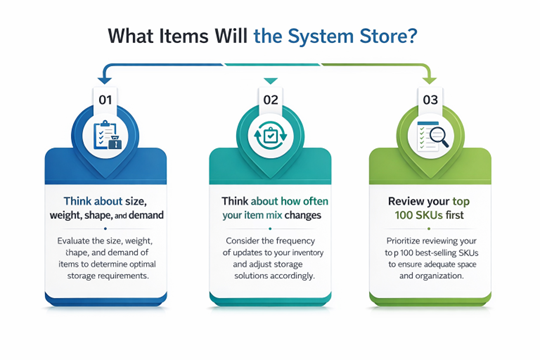
Think about size, weight, shape, and demand. Small to mid-size items with repeat picks often fit well. Odd shapes, fragile goods, very heavy loads, and messy carton sizes need more thought.
You should also ask how often your item mix changes. A setup that works for today’s catalog may fail next year. Good storage automation should support growth, not trap you in a fixed pattern.
Here’s a simple tip. Review your top 100 SKUs first. That usually tells you more than reviewing the full catalog.
3) How Much Space Will We Really Gain?
This is where many teams get too excited.
Vertical storage saves floor space by using building height. That matters even more when real estate is tight. CBRE reported that the U.S. industrial vacancy rate was 6.7% in Q4 2025, so there isn’t that much warehouse space. And even extra space does not fix the poor use of the cube inside your own building.
Here’s what you can do. Measure your ceiling height, sprinkler rules, column spacing, power access, slab limits, and safe operator space. A machine may fit on a layout drawing and still be awkward in real life.
For more tips, read our piece on modern warehouse shelving.
4) Which System Fits Us Better: VLM or Vertical Carousel?
This is the question most buyers ask first. It should come fourth.
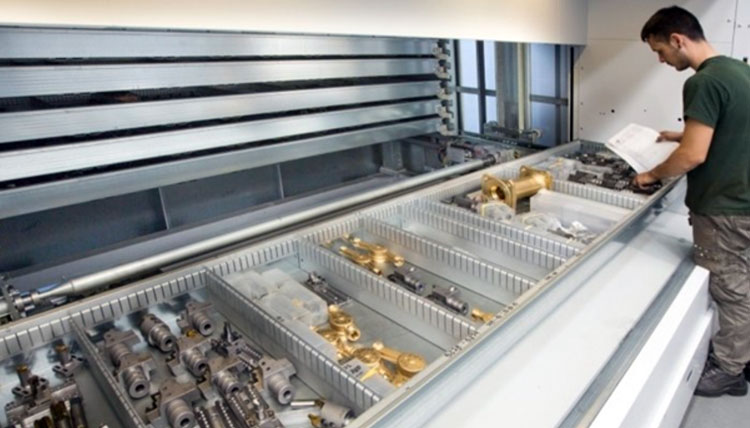
A VLM stores goods on trays and brings the right tray to the operator when they need it. It works well when you have plenty of items in different sizes, and you want more control over tray height. A vertical carousel rotates products in a loop and can be a great fit if you need fast, repeat access to smaller items.
Do not try to figure out which system is the best. Try to understand which system fits your pick pattern, SKU mix, and growth plan.
If your inventory changes often, then a VLM could work because they are more flexible. If your picks are simple and steady, a carousel could do the job.
5) Will It Work With Our Software and Picking Process?
A machine alone will not fix weak data.
Your team needs clean SKU data, location logic, and clear picking rules. The system should connect well with your WMS, ERP, or inventory software. It should also support barcode scans, cycle counts, and error checks.
This is where projects quietly fail. The hardware works, but the process around it does not. Remember that having smart inventory management systems is just as important.
6) What Will Downtime, Service, and Training Look Like?
Ask the vendor how service calls work. Ask what your team can fix on site and what needs more help. Also, ask what happens if the unit goes down during peak hours.
Training matters too. A good system should make work easier for your employees. And if you want to make the most of it, they have to understand how to use it efficiently. Your operators, supervisors, and maintenance staff all need clear training paths.
7) How Will We Measure Success?
Yes, ROI matters. But you also need daily measures that prove the system is working. Track pick time, order accuracy, space saved, labor moved to higher-value work, training time, and uptime.
Set a 30-day, 90-day, and 12-month review plan before you start implementing the solution. That forces your team to agree on what success looks like.
When you decide how you want to enhance and straighten your operations, do your best to make it work.