
Staff Reports
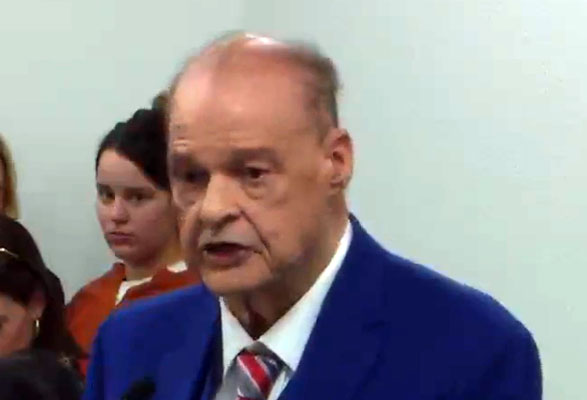
PHOENIX — Arizona Superintendent of Public Instruction Tom Horne delivered a pointed message to state lawmakers on Jan. 20: Academic achievement cannot flourish without safe school environments. In his annual State of Education speech to the House Education Committee, Horne called for increased funding to place more armed police officers on campuses, while highlighting notable academic gains under his department’s targeted interventions.
Horne emphasized that student safety is foundational to learning, citing alarming statistics on school threats. He referenced a 2024 Arizona Republic investigation reporting that Arizona schools contact law enforcement an average of more than 500 times per year in response to students making gun threats. “In schools without police officers, we are playing Russian roulette with a catastrophe waiting to happen,” Horne stated.
Since taking office in 2023, Horne has prioritized expanding the number of school resource officers. He reported that the number of armed officers in Arizona schools has risen dramatically from 190 to 565 over the past three years. “There are no massacres in police stations because they can defend themselves. We owe it to our students and staff to defend them,” he said. Horne urged lawmakers to approve additional appropriations this year, warning that denying district funding requests could lead to preventable tragedies.

Beyond safety, Horne showcased the Arizona Department of Education’s efforts to boost academic performance through focused support. He praised schools that prioritize core academics, noting widespread success across diverse student populations.
One key initiative is Project Momentum Arizona, originally sponsored by former Governor Doug Ducey and later adopted by the department after it was eliminated under his successor. Participating schools have demonstrated double the state average progress in reading and three times the average in math.
Horne also highlighted collaborations with the Office of Indian Education, resulting in substantial improvements in Native American districts. Schools in Ganado, Red Mesa, Baboquivari, Kayenta, Sacaton, and Tuba City more than doubled their math proficiency rates. At the same time, Chinle had two schools surpassing the state average in both math and reading.

In a direct intervention example, the department “adopted” Wilson School in a lower-income area, with staff providing weekly assistance to teachers and even leading classes. Math scores at the school increased by 27%. Additionally, Horne noted the redirection of federal COVID-relief funds—previously allocated to non-academic purposes—toward free tutoring. Over 17% of participating students achieved 6 months of academic progress in just 6 weeks.
Horne reaffirmed his support for school choice, pointing to growing parental demand for the Empowerment Scholarship Program. “I do not understand how anyone can say parents do not have a right to find a school that meets their child’s needs, unless people are so immersed in ideology that they lose sight of what is best for students,” he said.
He also promoted career readiness through the Student Industry Partnership, which connects students with opportunities to build job skills. Finally, Horne called for the renewal of Proposition 123—the voter-approved measure directing funds from the state’s land trust to education—with specific language to ensure the money goes directly to teacher pay raises rather than through district channels.
The speech comes amid ongoing debates over education funding, school safety, and enrollment challenges in Arizona public schools. Horne’s proposals for expanded police presence and sustained academic support are expected to shape legislative discussions in the coming session.